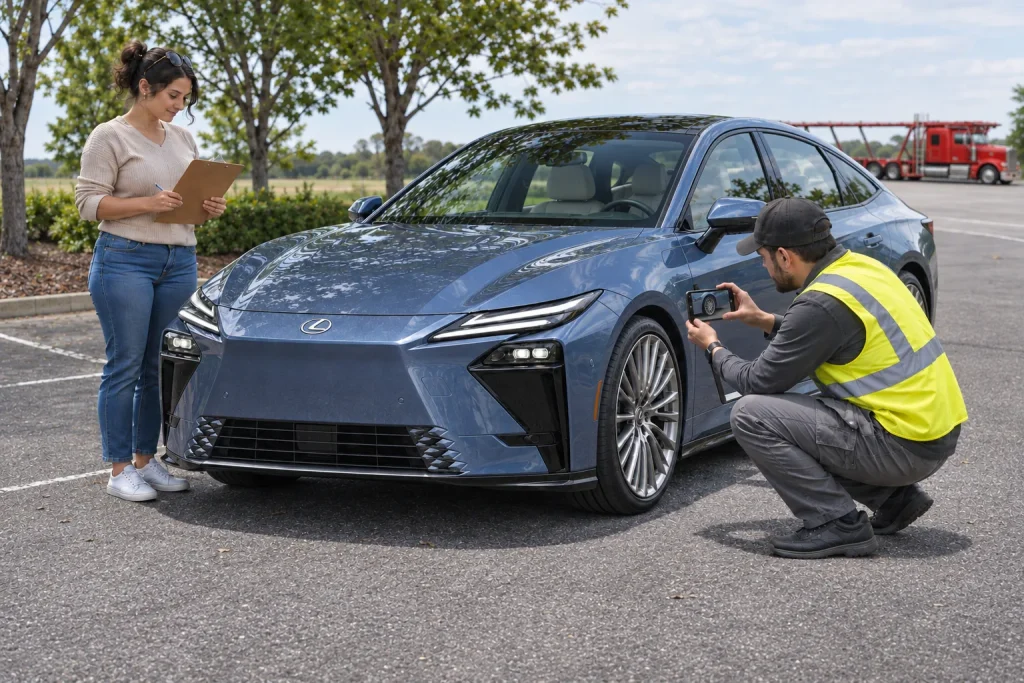
A car hauling pickup and delivery inspection creates a practical record if questions arise about a vehicle’s condition. It is not a formality to rush through while a driver is waiting. It is the point when the vehicle’s visible condition, mileage, accessories, and exceptions are documented before transport and compared again at delivery.
For a private owner, dealership, fleet manager, or auction buyer, a careful inspection creates a shared reference point with the carrier. It can also prevent a simple pre-existing scratch or warning light from becoming an avoidable dispute later. The key is to be present when possible, document what you see, and understand what belongs on the carrier’s inspection record.
Why the Pickup Inspection Sets the Baseline
Most auto carriers use a bill of lading, often called a BOL, that includes a vehicle condition report. At pickup, the driver and the person releasing the vehicle walk around it, note visible damage, and record the odometer reading. The driver typically uses the same document at delivery to compare the vehicle’s condition.
This record is especially valuable because vehicles move through several hands before loading. A seller may release a vehicle to a carrier, an auction may provide a gate pass, or a dealership employee may handle pickup. If the person signing the BOL has not reviewed the vehicle, the record may be incomplete from the start.
A broker coordinates the shipment and communicates with the customer and independent carrier. As FMCSA explains for automobile transport customers, a broker arranges transport rather than physically hauling the vehicle. The carrier performs the physical pickup, loading, transportation, and delivery. The shipper or authorized release contact should make sure the correct vehicle is available and that the condition report can be reviewed at pickup.
What a Good Pickup Record Includes
Start by confirming the basics: the year, make, model, color, vehicle identification number, license plate if applicable, and current odometer reading. Verify that the vehicle being loaded is the vehicle on the transport order. Similar-looking vehicles, especially at dealerships and auction lots, can create preventable confusion.
The condition portion should identify visible dents, scratches, paint chips, cracked glass, wheel damage, and body-panel damage. Look in good light when possible. A wet, dusty, or dark vehicle is harder to inspect accurately, so take close photos from multiple angles rather than relying on a quick verbal description.
Also document items that may affect loading or unloading. These include low ground clearance, aftermarket spoilers, a non-running condition, flat tires, loose body parts, oversized tires, or modifications that change the vehicle’s height or width. A vehicle with an air suspension should be discussed before pickup if it sits unusually low or cannot maintain normal ride height.
For open transport, road dust and normal weather exposure are expected. That is different from physical damage. Photographing a reasonably clean vehicle before pickup makes later comparisons more useful.
Prepare the Vehicle Before the Carrier Arrives
Inspection quality improves when the vehicle is ready. Remove loose personal belongings and valuables, as carriers may have policies that limit what can remain inside a vehicle. Personal items can shift during transport and complicate inspections. Do not assume belongings are covered; confirm any permitted items and the assigned carrier’s written coverage terms, limits, deductibles and exclusions before pickup.
Confirm the assigned carrier’s fuel or battery-charge instructions and follow the vehicle manufacturer’s transport guidance. Keep enough energy for the agreed loading and unloading procedure; there is no single fuel or charge target for every vehicle. Check tire condition and pressure against the vehicle’s instructions, and confirm it can be started if listed as operable. If it does not start, steer, brake, or roll normally, disclose that before dispatch. The carrier needs accurate information to plan loading equipment and position on the trailer.
If a vehicle has a custom alarm, immobilizer, kill switch, or special starting procedure, provide clear instructions to the person releasing it and to the coordinator before pickup. Do not assume a driver can troubleshoot an unfamiliar vehicle at the curb or in an auction yard.
Bring two sets of photos to the inspection: wide shots showing each side, front, rear, roof, and wheels, plus close-ups of existing damage. Time-stamped photos can be useful, but their value comes from clarity and consistency, not from the phone model used. Save them until the shipment is complete and any questions are resolved.
How to Review a Car Hauling Pickup and Delivery Inspection
At pickup, read the condition report before signing it. The shorthand on a BOL can be difficult to interpret, so ask the driver to clarify any markings or descriptions that are unclear. If you see damage that is missing from the form, request that it be added before the vehicle leaves.
The same principle applies at delivery. Inspect the vehicle before signing a clean delivery receipt whenever circumstances allow. Compare the vehicle with the pickup report and your photos, paying particular attention to low body panels, bumpers, mirrors, glass, wheels, and areas that were noted at origin.
Do not limit the review to bodywork. Confirm the odometer reading is reasonable for the loading and unloading movement, check that the vehicle starts if it was shipped as operable, and verify that keys, remotes, and documented accessories are present. If the delivery occurs after dark, use a flashlight and take clear photos. If a complete inspection cannot be done safely or adequately at the location, note that concern on the paperwork and promptly communicate with the carrier and broker.
A delivery signature usually acknowledges receipt, so it should not be treated as a quick administrative step. Still, a careful inspection does not mean holding a driver indefinitely. The goal is a focused comparison with the documented pickup condition.
If You Find Possible New Damage
Stay factual. Photograph the area from wide and close views, including an image that shows its location on the vehicle. Compare it with the pickup condition report and photos. Note the concern on the delivery receipt before signing, using specific language such as the panel and type of damage rather than a vague statement like “vehicle damaged.”
Then notify the carrier and the broker promptly, retaining copies of the pickup and delivery records, photos, and relevant communications. Before non-urgent repairs, ask the carrier how it wants the damage documented and inspected. If immediate work is needed for safety or to prevent further damage, keep photos, estimates and receipts and promptly explain what was done. Do not drive a vehicle that may be unsafe.
A damage note on the delivery record is useful evidence, but it is not a substitute for a required written claim. For covered interstate motor-carrier shipments, 49 CFR 370.3 distinguishes inspection and delivery notations from a written claim. Ask the carrier for its claims contact and follow the applicable contract and legal requirements, including documentation and deadlines. Inspection does not establish insurance coverage or guarantee that a claim will be paid.
Not every issue identified at delivery is necessarily transit damage. A mark may have been present but poorly documented at pickup, or it may be hidden by dirt, weather, or lighting. That is why a complete pickup inspection and clear photos protect everyone involved.
Pickup Access Can Affect the Inspection
Residential streets, gated communities, dense city blocks, and some apartment complexes may not be suitable for a multi-car carrier. If the carrier cannot safely enter or turn around, pickup or delivery may need to happen at a nearby wide, legal meeting location such as a shopping center parking area, subject to property permission and local conditions.
Plan this before the scheduled window, not when the truck is already nearby. The alternate location should have enough room for the carrier to maneuver, a safe place to inspect the vehicle, and a release contact who can be there on time. For auction vehicles, confirm the release number, storage status, pickup hours, and any gate requirements before the carrier arrives.
Enclosed transport can be a sensible choice for certain collector, luxury, or specialty vehicles, but it does not remove the need for an inspection. Open and enclosed carriers both need accurate condition documentation, vehicle details, and accessible pickup and delivery arrangements.
Give Your Coordinator the Right Information Early
An informed quote request helps a brokerage match the shipment with an appropriate independent carrier and avoid last-minute changes. Provide the vehicle’s make, model, year, operability, modifications, ground-clearance concerns, pickup and delivery ZIP codes, available dates, and the names and phone numbers for release and receiving contacts.
Mention whether the vehicle is at a residence, dealer, repair facility, auction, port-adjacent storage yard, or other controlled location. Include any appointment rules, gate passes, lot numbers, or restricted pickup hours. A vehicle that is not released or cannot be accessed when the carrier arrives may need to be rescheduled.
Fargo Express is a U.S. freight broker that can help customers coordinate open or enclosed vehicle transport and understand the information a carrier needs before dispatch. When requesting a car shipping quote, include inspection-related details upfront, especially existing damage, low clearance, non-running status, and access limitations.
The best inspection is not the longest one. It is the one both parties can understand later: accurate, legible, supported by clear photos, and completed at each handoff.
Preparing a pickup or delivery? Request a vehicle shipping quote with your vehicle, route, operating condition and planned dates.