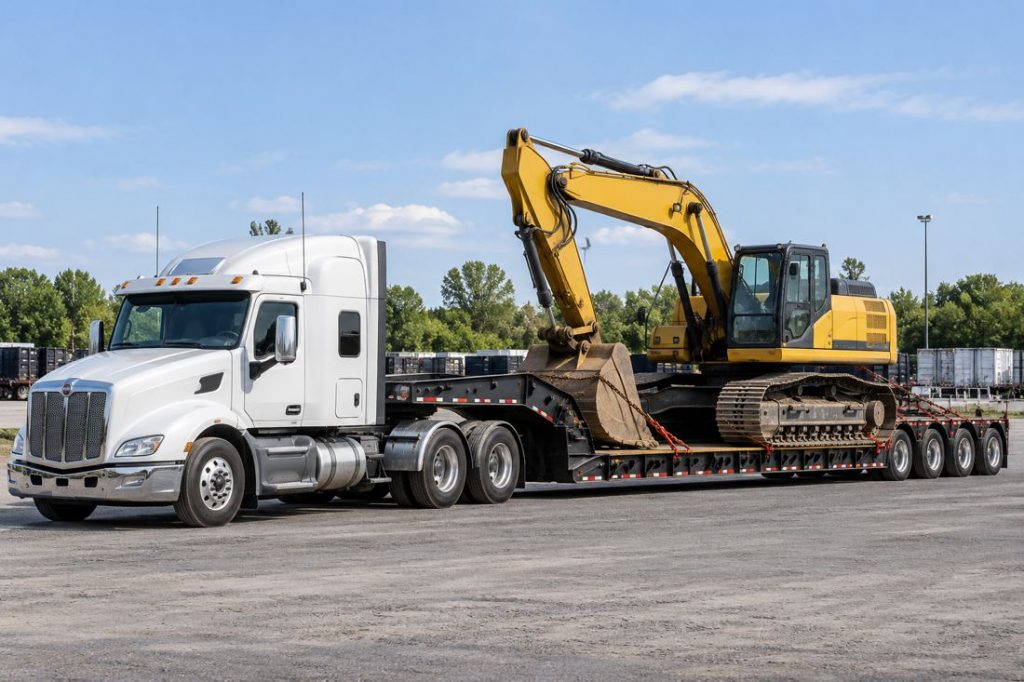
Shipping an excavator, tractor, loader, or other heavy machine starts with a clear picture of the complete shipment. The equipment model matters, but so do its transport dimensions, attachments, operating condition, and the access available at each location.
This guide walks through the information to gather before requesting a quote and the practical details to confirm before pickup.
1. Describe the equipment in its transport configuration
Start with the make, model, and a recent set of photographs. Explain exactly what will travel with the machine, including buckets, forks, blades, spare parts, or other attachments. Identify anything that will be removed and shipped separately.
Manufacturer specifications are a useful starting point, but the configuration of your machine may be different. Let your coordinator know whether dimensions and weight are confirmed or still need to be checked. Avoid treating an approximate figure as a verified measurement.
- Length: the complete transport length, including any attachment that stays installed.
- Width: the widest part of the shipment in its planned transport configuration.
- Height: the machine’s transport height, with folding or removable components identified.
- Weight: the confirmed weight of the equipment and everything traveling with it.
Practical tip: Send photographs from the front, rear, and both sides, plus clear views of attachments and identification plates. Photos help explain the load, but they do not replace confirmed dimensions and weight.
2. Explain how the machine can be loaded
Tell your coordinator whether the equipment starts, moves, steers, and brakes. A machine that can drive onto suitable transport equipment presents a different loading problem from a non-operational machine that needs recovery or lifting support.
Confirm what is available at both ends of the move. Do not assume a forklift, crane, loading dock, ramps, or a qualified operator will be provided. If outside loading assistance is needed, agree on who will arrange it before dispatch.
3. Review the trailer around the load
Flatbeds, step decks, and lowboy or removable gooseneck trailers serve different transport needs. The trailer name alone does not establish whether a machine will fit or how it can be loaded. Your coordinator and carrier need to review dimensions, weight, loading arrangements, and the proposed route together.
| Trailer option | Details to discuss |
|---|---|
| Flatbed | Deck access, loading equipment, and the complete loaded dimensions. |
| Step deck | Usable deck areas, loading method, and how the machine fits the proposed trailer. |
| Lowboy / RGN | Ground loading arrangements, ground clearance, capacity, and the complete shipment configuration. |
If the shipment requires permits or additional route planning, confirm the applicable arrangements with your coordinator before setting expectations for pickup and delivery. Requirements depend on the load and route.
4. Check pickup and delivery access
A site address does not tell the whole story. Share information about gates, turning room, overhead obstructions, ground conditions, operating hours, and the space available for loading or unloading. A trailer needs a suitable place to approach and work safely.
For an auction, dealership, port, or storage yard pickup, gather release documents, reference numbers, appointment requirements, and the contact details of the person releasing the equipment. Confirm that the machine is ready to leave before a truck is sent.
5. Agree on preparation and responsibilities
Follow the equipment manufacturer’s transport preparation instructions and coordinate the loading plan with the carrier. Discuss loose items, attachments, folding components, and any special handling requirements in advance. Do not remove parts or change the machine’s configuration without appropriate instructions and support.
Cargo securement requires a load-specific plan. FMCSA provides general cargo securement guidance and identifies additional requirements for heavy vehicles, equipment, and machinery. The carrier should review the applicable requirements for the actual shipment.
Take clear condition photographs before loading, identify existing damage, and agree on the documents and checks to complete at pickup and delivery. Confirm whom to contact if the load, timing, or site arrangements change.
Your equipment shipping quote checklist
- Make, model, current photographs, and operating condition.
- Transport length, width, height, and confirmed weight.
- A list of attachments and separate pieces.
- Pickup and delivery addresses, access details, and site contacts.
- Available loading support and any help that must be arranged.
- Preferred dates, flexibility, and release or appointment requirements.
Clear information helps turn a general request into a practical transport plan. Fargo Express can review your shipment details and discuss the next steps for moving your equipment across the United States.
Request an equipment shipping quote.
Further reading: FMCSA Cargo Securement Rules. Transport preparation should also follow the instructions for the specific equipment.