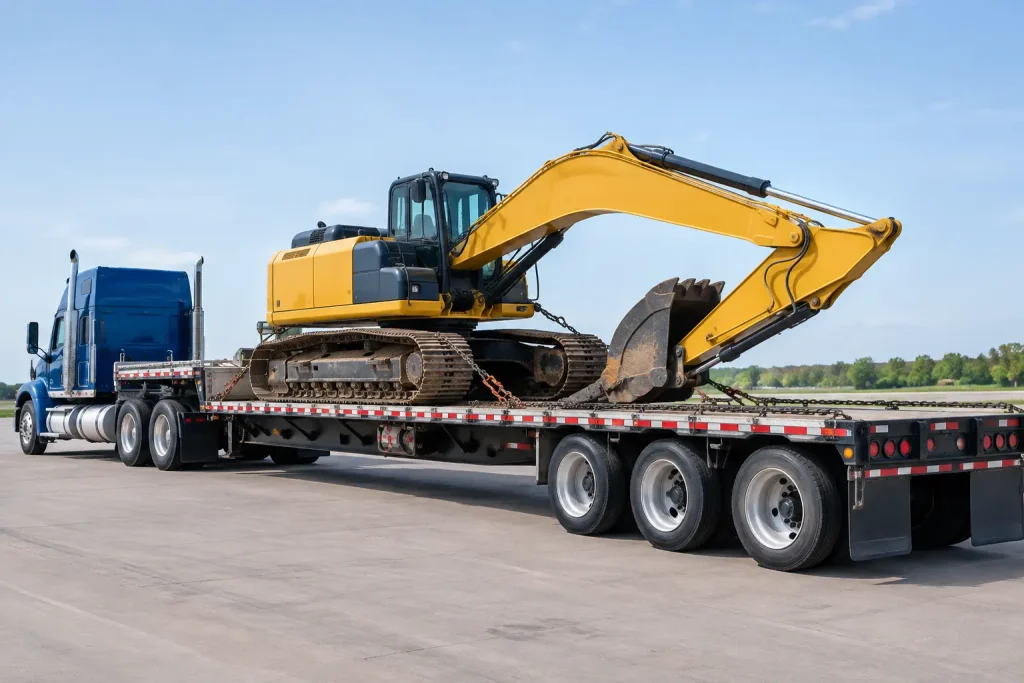
A flatbed quote can change quickly when the shipment details change. A machine described as “about 10,000 pounds” may need a very different trailer, permit plan, and rate than one with verified dimensions, attachments, and loading requirements. Gathering the freight quote information needed before contacting a broker helps avoid preventable delays, mismatched equipment, and last-minute pricing revisions.
For open-deck freight, the goal is not simply to find a truck. It is to give the broker and carrier enough accurate information to coordinate a trailer, route, driver, and pickup plan that fit the actual load.
Freight Quote Information Needed Before You Request Pricing
Start with the shipment itself: what it is, how much it weighs, how large it is, and whether it can be loaded safely onto a standard open-deck trailer. Photos, manufacturer specification sheets, and a clear pickup contact often answer questions that a short equipment description cannot.
A useful quote request should include the commodity, pickup and delivery locations, ready date, dimensions, total weight, loading method, and any site limitations. If a detail is unknown, say so. An experienced coordinator can identify what needs to be confirmed, but estimates should be labeled as estimates rather than presented as final measurements.
Exact commodity and equipment description
Name the freight as specifically as possible. “Excavator” is a starting point, but the carrier also needs the make, model, year when known, and whether the unit is operational. For machinery, include attachments such as buckets, forks, booms, counterweights, toolboxes, or detachable components.
This matters because a unit’s transport dimensions may be different from its standard product dimensions. A boom may need to be lowered or removed. A bucket may add length. A removable attachment may allow the freight to fit on a step deck instead of requiring a larger or more specialized trailer.
Also state whether the equipment rolls, drives, or must be lifted. A non-running machine may require a winch-capable carrier, a crane, a forklift, or another loading arrangement. The shipper or site operator should confirm who will operate equipment and who is responsible for loading and unloading.
Verified dimensions and weight
For open-deck freight, provide each piece’s length, width, height, and verified shipping weight. Measure the cargo in its transportation configuration, including installed attachments and anything that remains with it. The carrier must also check the overall dimensions and weight distribution of the proposed truck, trailer, and load.
Weight should be as accurate as practical. Manufacturer specifications can be useful, but optional components, fuel, attachments, and modifications may change the actual figure. For multi-piece loads, list the shipping weight of each piece. The carrier uses the actual truck and trailer configuration, axle spacing, and load placement to check axle weights and permit requirements.
Height deserves special attention. Cargo height alone does not establish legal road clearance: trailer deck height and any blocking also contribute to the loaded height. A standard flatbed deck is generally higher than a step deck or RGN deck, so the same machine can have very different overall transport heights depending on the trailer used.
If freight exceeds common legal limits for the route, it may be oversized or overweight. FHWA size-and-weight guidance explains the federal framework and state role; there is no single federal height limit for every route. State and local permit requirements can vary with the route, dimensions, weight, and travel dates. Do not assume a prior shipment’s permit plan applies to a new move. Our oversize permit planning guide covers the details to confirm.
Photos and specification documents
Clear photos often prevent confusion before a carrier accepts the load. Send views from all sides, plus close photos of tracks, tires, lifting points, attachment connections, and any visible damage that could affect loading. For machinery, a manufacturer spec sheet is especially helpful.
Photos should show whether the equipment is accessible, whether it has clearance concerns, and whether loose items need to be removed or secured before transport. They also help determine whether a tarp might be needed for components that cannot be exposed to weather. A tarp is not automatically appropriate for every load, particularly freight with sharp edges or irregular shapes.
Pickup and Delivery Details Affect the Quote
A city and ZIP code are enough for an early budget estimate, but they are not enough for a firm transportation plan. Exact addresses, site contacts, and operating hours help determine whether the truck can safely access both locations.
Describe the pickup and delivery sites plainly. Mention tight turns, narrow gates, overhead wires, soft ground, low branches, jobsite traffic, steep grades, restricted entrance hours, and any requirement to check in with security. A full-size tractor-trailer needs more turning space than many facilities expect.
Loading and unloading arrangements
Confirm how the freight will get on and off the trailer. A drive-on machine may be loaded on an RGN with detachable gooseneck access, while palletized industrial equipment may need a forklift or crane. The site must have equipment with adequate capacity and a qualified operator available at the scheduled time.
If loading requires a crane, provide the planned lift method, lift location, appointment window, and site contact. The transportation quote may cover the carrier’s truck and trailer but not third-party loading equipment, rigging, labor, or site services unless those items are specifically arranged.
Loading can also determine trailer choice. A machine may fit dimensionally on a step deck but still need an RGN because it cannot safely climb ramps. Conversely, a detachable trailer can add cost and may be unnecessary if a standard flatbed and forklift loading process will work.
Dates, flexibility, and appointment requirements
Provide the freight-ready date, delivery deadline if one exists, and any flexibility around either. Avoid describing a date as flexible if the jobsite, auction release, production schedule, or receiving crew cannot actually accommodate changes.
A tight pickup or delivery window may limit available carriers. It can also require an appointment, layover planning, or additional coordination. Oversize moves may have state-specific permitted travel dates and conditions. Confirm the applicable state DOT requirements before promising a delivery date internally; California’s single-trip permit guidance, for example, describes route-dependent conditions and permit validity.
Choose the Trailer Based on the Load, Not the Label
Shippers often request a flatbed because it is a familiar term. Flatbed is a trailer category, not always the right answer. The correct equipment depends on the freight’s dimensions, loading method, weight distribution, and route.
A standard flatbed can be a practical option for legal-height machinery, steel, crated industrial freight, and equipment that can be forklifted or craned on. A step deck provides a lower main deck for taller freight. An RGN or lowboy may be needed for taller, heavier, or drive-on equipment, especially when deck height and ramp access matter.
For very long, wide, tall, or heavy loads, a multi-axle configuration or specialized trailer may be required. The broker coordinates the transportation plan, while the carrier ultimately confirms whether its equipment, permits, route, and driver availability support the shipment.
Do not rely on trailer capacity alone. A load can be within a trailer’s general rating but still create axle-weight, deck-space, clearance, or securement challenges. For interstate commercial transportation, FMCSA cargo securement rules in 49 CFR Part 393, Subpart I, set general and commodity-specific requirements. Carriers must evaluate securement for the specific cargo, and machinery may also fall under commodity-specific securement provisions.
Details That Commonly Change a Freight Quote
A quote is only as dependable as the shipment description. The following issues commonly require a revised plan:
- The actual width includes an attachment that was not listed.
- The stated weight excludes a bucket, counterweight, fuel, or bundled components.
- A non-running unit was described as drive-on.
- Pickup requires a crane, forklift, winch, or personnel that are not available.
- The truck cannot access the jobsite because of gates, terrain, overhead clearance, or road restrictions.
- The shipment becomes oversized after it is placed on the proposed trailer.
These are not minor administrative details. They affect carrier acceptance, routing, permits, equipment availability, and the ability to load without disruption. Giving complete information early is usually more efficient than trying to force a shipment into the first quoted trailer type.
A Practical Quote Request Checklist
Before requesting an open-deck freight quote, gather the following information in one email or form submission:
- Pickup and delivery addresses, contacts, phone numbers, and operating hours
- Commodity description, make and model, and whether equipment is operational
- Overall length, width, height, and weight in transport condition
- Photos from multiple angles and any available spec sheet
- Attachments, loose components, or items shipping separately
- Required trailer type, if known, and loading or unloading method
- Freight-ready date, delivery requirements, and appointment restrictions
- Shipment readiness: ready for pickup, preparing for shipment, or planning an estimate; note any pending purchase or auction release
- Site access conditions, including gates, clearance issues, and jobsite limitations
If you are uncertain about trailer type or permit status, include the facts you do know instead of guessing. A freight coordinator can review the measurements and loading plan, then determine whether flatbed, step deck, RGN, or another option is more appropriate.
Fargo Express is a freight broker coordinating interstate ground delivery and oversized transportation with independent carriers for commercial shipments. When requesting a quote, provide the most complete shipment details available and include photos whenever possible. A clear first request gives everyone involved a better basis for planning the move safely and realistically.
Request an open-deck freight quote with your cargo, pickup and delivery details, and shipment readiness.