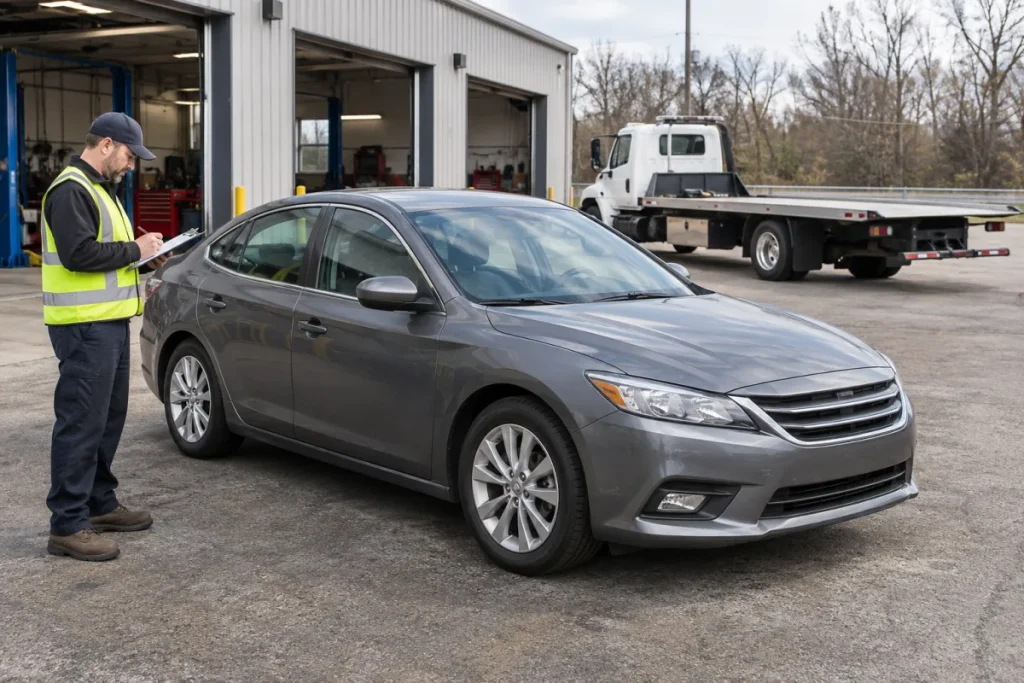
A vehicle that will not start changes the transport plan well before a carrier reaches the pickup location. The core non running car shipping requirements are accurate condition details, workable pickup and delivery access, a confirmed release process, and a carrier equipped to load the vehicle safely. Missing one of those details can lead to a failed pickup, a reschedule, or added handling costs.
For a private owner, dealership, fleet manager, or auction buyer, the most useful approach is simple: describe the car as it actually sits today, not as it might be after a repair. A vehicle that does not start but rolls, steers, and brakes is very different from one with locked wheels, a missing key, or collision damage.
What “non-running” means to a car carrier
“Non-running” is a broad transport term, not a complete vehicle description. It can mean the engine will not start, but it may also mean the car cannot be driven onto a trailer for another reason. A coordinator needs the specific limitation to match the shipment with an independent carrier whose trailer and loading equipment are appropriate.
A vehicle may be non-running because of a dead battery, mechanical failure, accident damage, missing components, or long-term storage. Each condition affects loading differently. A dead-battery vehicle that rolls and steers may be winch-loadable. A vehicle with four flat tires, seized brakes, or damaged suspension can require more planning and may not be suitable for a standard multi-car trailer.
When requesting a quote, state whether the vehicle:
- Starts and drives under its own power
- Rolls freely in neutral
- Steers normally
- Has working service brakes
- Has a parking brake that can be released for the agreed loading method
- Has inflated tires that hold air
- Has its keys available
- Has damage, missing wheels, low ground clearance, or loose parts
Photos are especially helpful for accident vehicles, project cars, classics, and auction purchases. Include clear views of all sides, the tires, the undercarriage if it is visibly damaged, and the pickup area when access may be tight.
Information to provide before booking
Carriers plan space and loading sequence around the vehicle dimensions and condition provided. The year, make, model, and vehicle identification number help confirm the vehicle type, but they do not replace a condition report. Tell the coordinator about aftermarket lift kits, lowered suspension, oversized tires, roof racks, or other modifications that change height, length, or loading clearance.
Pickup and delivery addresses matter
A full-size auto transport truck needs room to turn, stop, and load without blocking traffic or creating a safety issue. Residential streets with low branches, tight corners, parked cars, weight restrictions, or homeowners association rules may not work for direct trailer access.
Limited access may require a lawful, carrier-approved loading location with permission from the site operator. For a non-running car, also arrange how it will be moved there; driving it to a meeting point is not an option. Confirm any separate towing or site-handling arrangements before dispatch.
Pickup sites create their own requirements. A vehicle stored in a backyard, underground garage, narrow alley, impound lot, or soft field may need to be moved to an accessible area before loading. The carrier is responsible for operating its equipment, while the shipper or authorized site contact is responsible for providing lawful access and making the vehicle available.
Auction, dealer, and storage-lot releases
If someone other than the owner controls the vehicle, confirm release requirements before scheduling. Auction yards, dealers, repair shops, storage facilities, and impound locations may require a buyer number, release document, appointment, gate pass, or payment confirmation.
Give the carrier the correct lot address, vehicle location, stock number, contact name, phone number, and available pickup hours. Verify that the facility recognizes the vehicle as released for transport. A carrier generally cannot collect a vehicle that the yard has not cleared for pickup, even if the transport order is otherwise ready.
For a purchased auction vehicle, see our auction car release-document guide and confirm the facility’s current pickup instructions.
Loading requirements for an inoperable vehicle
A non-running vehicle may need a winch or other specialized loading equipment; the carrier must assess the actual condition. A winch can assist with a car that rolls and steers, but the loading plan still needs suitable tire support, manufacturer-approved attachment points, adequate clearance, and a usable path.
Be direct about any limitation that affects movement. Locked steering, locked wheels, a vehicle stuck in park, a missing wheel, severe collision damage, or a car sitting on the ground can require specialized handling or preparation at the pickup site. Do not ask a carrier to discover those conditions at arrival.
An open auto carrier may be an option if the assigned carrier confirms that its equipment can load and secure the specific vehicle. Enclosed transport may make sense for a high-value collector car, a vehicle that needs weather protection, or a shipment with particular clearance concerns. Availability, route, vehicle size, and loading condition all affect the final option.
Carriers select suitable equipment and must follow applicable FMCSA cargo securement requirements for interstate transport, as well as the vehicle manufacturer’s instructions. A loading attachment point is not automatically an approved transport tie-down point. Shippers should not improvise tie-down methods, modify the trailer, or direct loading operations. If loose parts, spoilers, body panels, or other components could shift during transport, identify them before dispatch so the carrier can assess the shipment.
Model-specific instructions matter when power, steering, or parking-brake release is unavailable. For example, Tesla’s Model 3 transporter instructions distinguish approved transport and loading methods and warn about collision-damaged high-voltage components. The carrier should review the instructions for the actual model; collision-damaged EVs need appropriate safety assessment before handling.
Prepare the vehicle without creating surprises
The vehicle does not need to be restored before it can ship, but it should be ready for the agreed loading plan. Remove personal belongings and loose items where possible. Household goods inside a vehicle can shift, create damage concerns, complicate inspections, and may not be accepted by the carrier.
Confirm the carrier’s preparation requirements for fuel or battery charge rather than assuming one rule fits every vehicle. Do not attempt to drain fuel or work on a damaged battery for transport. Make sure the key, fob, or other required access device is available. If the vehicle has a battery disconnect, alarm, immobilizer, air suspension setting, or unusual ignition procedure, provide clear information before pickup.
Document its condition with dated photos before release. Photograph existing scratches, dents, cracked glass, interior damage, and any mechanical or collision issues that are visible. At pickup, review the carrier’s inspection report, often called a bill of lading or vehicle condition report, and make sure pre-existing damage is recorded accurately. Repeat that review at delivery before signing final paperwork.
Schedule around real loading conditions
Non-running shipments may need additional lead time and flexibility because suitable loading equipment must be confirmed. A broker can coordinate with independent carriers, but carrier acceptance depends on the lane, equipment needs, vehicle condition, pickup readiness, and available space. A requested date is not the same as a guaranteed pickup appointment.
Be available during the pickup window, or designate an adult who can release the car and sign paperwork. The delivery contact should also be reachable and prepared to inspect the vehicle. If the car cannot be moved at delivery, confirm that the delivery site can safely accommodate unloading and that any onward towing arrangements are separate and ready.
Changes should be reported immediately. If the battery has been removed, the wheels have locked since the quote, the auction has changed its release rules, or the car is no longer accessible, tell the coordinator before dispatch. Accurate updates give the brokerage and carrier a chance to adjust the plan rather than face a preventable failed pickup.
Get a quote based on the actual condition
A useful quote request for a non-running car includes the origin and destination, vehicle year/make/model, whether it rolls, steers, and brakes, whether it needs a winch, its modifications or damage, and the earliest date it can be released. Include auction or facility details when applicable, along with any access restrictions at either end.
Fargo Express coordinates auto transport with independent carriers and can help clarify the information needed for an informed shipment request. The goal is not to make a difficult vehicle sound simple. It is to give the assigned carrier a realistic picture of the car, the site, and the loading work before the truck is scheduled.
Acceptance depends on the vehicle condition, site access, and availability of suitable loading equipment. Confirm the plan with the carrier before scheduling so unresolved handling or release issues can be addressed first.
Explore Car Shipping across the U.S. or request a car shipping quote. State clearly that the vehicle is non-running and describe whether it rolls, steers, and brakes so Fargo Express can coordinate a review with an independent carrier.